
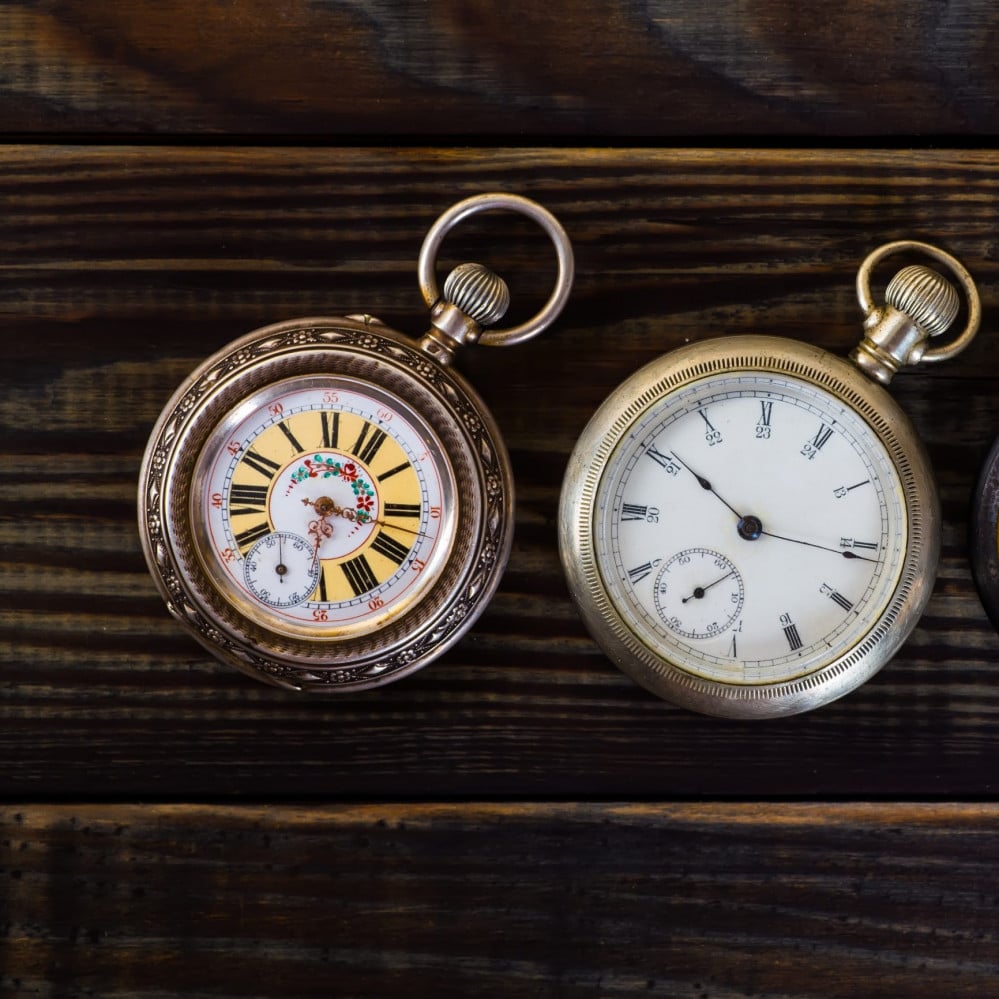
Historical clocks from the period between the 1950s and 1980s:
In this article, we will travel with you to a time period with historical watches between the fifties and nineties to learn about the design of watches in these times.
Throughout history, watches have always been important accessories for both women and men. Many believe that elegance begins with a watch because of its charming effect, in addition to shaping personality and making a first impression.
Clocks in the fifties:
We begin by listing the types of historical watches in the 1950s AD. In this era, everyone wore a wristwatch as there was no other way to tell the time except through it. Women's wristwatches were characterized by being small in size with unique and amazing designs that suited the dresses and fashions of that era. As for the designs of men's watches, they were large in size and predominantly formal in character, and sometimes small men's watches were available.
The watches of the fifties were distinguished as one of the finest types of historical watches because they were handmade. Some were made of gold, silver, nickel, or other metals as well. Watches appeared in different colors and shapes, but square and round watches were known to be the most popular and widespread.
Among the historical clocks of this period were children’s clocks inspired by cartoon characters that were popular at the time, such as “Alice in the Blue Sea, Superman”.
Pocket watches were one of the watches that were widespread at that time because of their low price, in addition to the fact that there were people who did not prefer to wear wristwatches, so they turned to this type of watch to tell the time.
In the late 1950s, watches began to move towards a more streamlined, flatter, and modern look. It was truly a glimpse of what watches would look like in the 1960s.
The evolution of watches in the 1960s and 1970s:
In the context of discussing historical watches, fashion trends began to develop rapidly and very modernly, until they reached their peak in the sixties and seventies of the last century, where cheerful colors, short clothes, and even watches had their share of this development.
Quartz watches have been developed by a Japanese company. These watches are regulated by an oscillating crystal that creates a very precise signal and frequency capable of providing a digital display of time in hours, minutes, and seconds.
This revolutionized the world of historical watches, especially in the 1970s, as the demand for electronic watches increased, which negatively affected the mechanical watch industry, especially in Switzerland.
Looking at the designs of this era of historical watches, the colors and shapes of watches in that period were characterized by bright and cheerful colors appropriate to the fashion of that time, especially women's watches. Some were small in size and some were large, made of different metals, some of which were made of silver, some of which were made of gold, in addition to other different metals. Their prices varied according to their brand and the metals from which they were made.
Discover a selection of luxurious men's watches with high quality and competitive prices.

Clocks in the 1980s:
Most design trends of the 1980s did not stand the test of time, but some 1980s watch designs have remained popular despite the variety of historical watch designs in different eras; this is most surprising if we consider that the 1980s was the peak of what is called the “quartz crisis”, when interest in classic watches dwindled and the market was flooded with cheap battery-operated wristwatches.
In the early 1980s, digital watches with metal straps were the dominant fashion. They remained the most popular, but lost some of their appeal in later years. Newer digital watches with built-in calculators and basic data organizers were geared specifically towards tech enthusiasts, and demand for these watches increased by the middle of the decade.
Leather straps made a strong comeback and remain a popular design element in historical watches, still in demand today. By the late 1980s, some watch faces were returning to Roman numerals. Elegant designs, such as a single large dot at 12 o'clock, were also popular during this period. Vibrant plastic watches also emerged. These first appeared in Europe and reached North America by the mid-1980s. Young people often wore two or three of these watches on the same wrist.
In general, watches during this period were one of the biggest and most important fashion trends, and their colors were predominantly cheerful, with bright colors dominating.
Clocks in the nineties:
The last period we will discuss in terms of historical clock periods is the 1990s AD.
The 1990s saw a remarkable evolution in watches, with quartz movements establishing a strong foothold in the industry. At the same time, there was a glimmer of hope on the horizon, as sales of mechanical watches had been slowly rising in the mid-1980s, prompting several brands to focus on producing mechanical timepieces.
At the same time, there was a growing interest in vintage historical watch designs, such as old chronograph watches that were very well suited to pilots’ outfits, and then they spread throughout the world in the 1990s.
The 1990s is also considered the decade in which major movie stars introduced luxury watches to the public, especially wristwatches that were characterized by their large size at that time.
This period was marked by a growing appreciation for exquisite craftsmanship and stunning designs reminiscent of the wonders of mechanical watchmaking. The 1990s was the decade in which mechanical watchmaking returned to its rightful place in the spotlight.